
Does a B2B store on Shopify or Shoper make sense? Pros, cons and the limits of B2C platforms

Author: Justyna Brończyk
Key Projects Lead
· 8min read

In short: Shopify and Shoper are good platforms for B2C stores and, in simple cases, for small-scale wholesale too. Trouble starts when B2B stops being “a store with a discount for companies”: customer-specific price lists from the ERP, credit limits, payment on terms, several buyers within one company and orders with hundreds of lines. At that point every one of those features becomes a separate app, a workaround or a compromise, and cost and risk grow faster than sales.
Why do B2B companies consider Shopify and Shoper at all?
I understand the appeal, because I hear it in many first conversations. SaaS platforms offer three things: a low barrier to entry, launch in a few weeks and no worrying about servers, updates or security. On top of that, business owners know them from their own shopping or from the B2C store they already run.
The reasoning is simple: the retail store works, so let’s add a tab for trade customers. Sometimes that really is enough. More often it turns out that B2B sales have different mechanics from consumer sales, and a platform built around a B2C cart doesn’t know those mechanics.
I covered the general criteria for choosing between SaaS, open source and custom builds in which e‑commerce engine to choose. Here I focus on one specific question: what happens when you try to run B2B sales on a platform designed for B2C.
What are the advantages of a B2B store on Shopify or Shoper?
To be fair, let’s start with what these platforms do well, because in some cases it’s all you need.
- Fast launch: a ready store with payments, shipping and a theme goes live in weeks, not months.
- Low upfront cost: you pay a subscription and possibly a few apps, with no large implementation budget.
- No technical overhead: hosting, updates and security are the vendor’s job. You don’t need your own IT team to keep the store running.
- One admin panel with B2C: if you already sell retail on the platform, handling wholesale in the same panel is convenient for a small team.
- App ecosystem: the Shopify and Shoper app stores offer add-ons for wholesale prices, minimum quantities and business registration forms.
- Strong B2C foundations: online payments, marketing and integrations with marketplaces and carriers are mature, because that is these platforms’ core market.
Shopify is also building its own B2B features, such as company profiles, catalogues with price lists and payment terms. The full set, however, is available on the top plan, Shopify Plus, which costs many times more than the basic plans. On Shoper, wholesale relies mainly on customer groups with discounts and on apps from its marketplace.
When does a B2B store on these platforms make sense?
There are scenarios in which I would recommend Shopify or Shoper without hesitation:
- You’re testing a B2B channel: you want to see whether trade customers will order online at all before investing in a dedicated platform.
- A D2C brand with a handful of trade customers: you run a retail store and a dozen or so partners get a fixed percentage discount.
- Simple pricing: one or a few price groups, with no prices negotiated individually with each customer.
- A small catalogue: hundreds of SKUs rather than tens of thousands, with simple variants.
- Upfront payment: customers pay when they order, with no trade credit or invoices on terms.
- No ERP or a simple accounting system: orders can be moved to invoicing by hand or with a simple integration.
If your sales model matches this list, a B2C platform is a sensible, low-cost choice. A full B2B platform would be overkill.
Where do B2C platforms start to get in the way of B2B sales?
The line usually appears when B2B sales start to reflect real trading relationships rather than just a company discount. These are the areas where I see problems most often.
Customer-specific price lists and discounts from the ERP
In wholesale and distribution there is rarely a single price. Customer A has a price list negotiated a year ago, customer B a discount on a product group, customer C a contract price on 40 SKUs. The source of truth is the ERP, not the store.
B2C platforms work with prices at product level and possibly customer-group level. Mapping thousands of individual prices requires apps that store them on their side, or a sync that hits API rate limits once you have many customers and products. I know the result from talking to companies after such attempts: the customer sees one price in the store and another on the invoice, and calls their sales rep. Exactly what the store was supposed to prevent.
Credit limits, payment terms and receivables
B2B companies buy on invoice with 14, 30 or 60-day terms. The store needs to know how much credit the customer has left, whether they have overdue invoices and whether the order can be accepted at all.
That data lives in the ERP and changes daily. A B2C checkout is built around paying at the time of order, so blocking orders over the limit or showing receivables in the customer account is usually a separate integration project, not a setting in the admin panel.
Multiple buyers within one company
In B2C an account is one person. In B2B the customer is a company: a purchaser places the order, a manager approves it, accounting downloads invoices and every branch has a different delivery address. You need roles, permissions, approval workflows and budgets per branch.
Shopify Plus covers part of this. On lower plans and on Shoper, such structures are assembled from apps or can’t be modelled at all.
How orders are placed
B2B customers rarely browse the catalogue as they would in a clothing store. They order by SKU, paste a list from Excel, repeat last month’s order, buy in bulk packs or send a request for quote (RFQ) for an unusual quantity. Quick order, CSV import, reorders and in-store price negotiation are standard on B2B platforms, and add-ons of varying quality on B2C ones.
Integration with ERP, PIM and WMS
In B2B sales the store is one of several systems, not the centre of operations. Stock levels, prices, documents, order statuses and product data have to flow both ways, often in near real time. I describe how to plan those connections in the article on integrating a B2B platform with ERP, PIM, WMS and CRM.
On a SaaS platform you build integrations through the vendor’s API, with its limits and version changes. We have built and maintained Shopify and Shoper integrations ourselves for an app that shows store customer data during incoming calls. It can be done well, but it takes background sync, webhook handling and keeping up with API changes. In simple B2C that rarely hurts. In B2B, where the integration is the backbone of sales, it is an ongoing maintenance cost.
Large catalogues and complex products
Tens of thousands of SKUs, products with many technical attributes, substitutes, part compatibility, configurators and quantity-based pricing. B2C platforms have limits on variants and product options that stay invisible with a simple range but show up in the first week of migrating a technical catalogue.
What does B2B on a B2C platform really cost?
A cheap start is the strongest argument for Shopify and Shoper, so it’s worth costing it honestly over several years.
- A higher-tier subscription: B2B features usually sit in more expensive plans, and on Shopify the full set only comes with Plus.
- Apps: wholesale price lists, credit limits, quick order, company roles. Each is a separate subscription, and five or six of them add up to an amount comparable with running your own platform.
- Transaction fees: with high B2B order values, a percentage of turnover hurts more than in B2C.
- ERP integrations: building and maintaining them, including keeping up with the vendor’s API changes.
- Process workarounds: time your sales and customer service teams spend correcting prices, approving orders by hand and answering phone calls.
- The cost of migrating later: data, URLs and customer habits that will have to move once the platform no longer fits.
You’ll find the full list of cost components and how to calculate TCO in how much does a B2B platform cost.
How do you avoid getting locked into the platform?
A SaaS platform is a rental, not something you own. The vendor decides on pricing, API scope, feature roadmap and terms of use. In B2C that is acceptable, because a store is easier to move. In B2B, where the platform holds price agreements, companies’ order history and integrations with several systems, switching vendors after three years is a project of many months.
Before you choose a platform, ask:
- Can I export all my data, including customer price lists and order history, in a format that can be imported elsewhere?
- Which B2B features are part of the platform core, and which come from third-party apps that may disappear or change their pricing?
- What are the API limits, and what happens when I sync the full price list from the ERP?
- How much will the subscription with all the apps cost when turnover doubles?
What’s the alternative when B2C is no longer enough?
If most of the problem areas above apply to your company, it’s worth considering a platform designed for B2B from the start. Options include open source solutions such as Magento (Adobe Commerce), Shopware or Sylius, as well as natively B2B platforms, including our own Endora Commerce, where customer-specific price lists, credit limits and company roles are part of the core rather than add-ons.
We compared how these platforms differ for industrial and manufacturing companies in the article on Magento, Sylius and WooCommerce for B2B. If you run a wholesale business, also see how a platform for distributors differs from a standard B2B store.
It doesn’t have to be all or nothing. A common and sensible setup is a B2C store on Shopify or Shoper plus a separate B2B platform for trade customers, both connected to the same ERP. Each channel gets a tool that fits its mechanics.
So what’s the takeaway?
Shopify and Shoper aren’t bad platforms. They are good platforms for a different job. For testing a wholesale channel, for a simple discount for a dozen partners or for a D2C brand with a little wholesale on the side, they are enough and cheaper than anything else.
But when B2B is a significant part of your revenue and your sales rely on ERP price lists, trade credit and orders with hundreds of lines, bending a B2C platform to fit B2B processes usually ends the same way: a growing number of apps, workarounds and calls to sales reps. Better to notice that before implementation than after two years of subscriptions.
FAQ
Does Shopify support B2B sales?
Yes, Shopify has native B2B features such as company profiles, catalogues with price lists and payment terms. The full set is available on Shopify Plus. On lower plans, wholesale is built mainly with apps.
Can you run an online wholesale store on Shoper?
In a simple form, yes: customer groups with discounts and wholesale pricing apps let you handle small-scale wholesale. Customer-specific price lists from the ERP, credit limits or company roles require add-ons or integrations, and in some cases can’t be modelled at all.
When should you move from a B2C store to a B2B platform?
When wholesale becomes a significant part of revenue and your sales reps increasingly correct prices, approve orders by hand and answer questions about receivables. That’s a sign the platform doesn’t reflect your sales process.
Can you have a B2C store on Shopify and a separate B2B platform?
Yes, and it’s often the most sensible setup. Both channels use the same ERP as the source of stock and prices, and each gets a tool that fits its sales mechanics.
Wondering whether your wholesale business will fit on Shopify or Shoper? Book a free consultation, we’ll go through your sales process and tell you whether a SaaS platform is enough or whether you’d be better off with a B2B sales platform from the start.
Our services
Full-spectrum B2B e‑commerce support
B2B sales platforms on Magento, Shopware, Sylius and Endora Commerce: per-customer price lists, RFQ, a customer portal and ERP integration.
PIM ImplementationPIM implementation (Pimcore, Akeneo, Ergonode) integrated with your ERP and sales platform: one source of product data, descriptions and images for your B2B store and marketplaces.
E‑commerce Consulting and AnalysisB2B e‑commerce consulting: online sales strategy, platform selection, implementation roadmap and data analytics (GA4, Power BI, Looker Studio). Decisions based on data, not gut feeling.
Keep reading
Recently published

How much does a B2B platform cost? What goes into implementation and running costs
The licence is only the start. What a B2B platform really costs: implementation, integrations, migration and maintenance. How to compare quotes and work out TCO.
Read more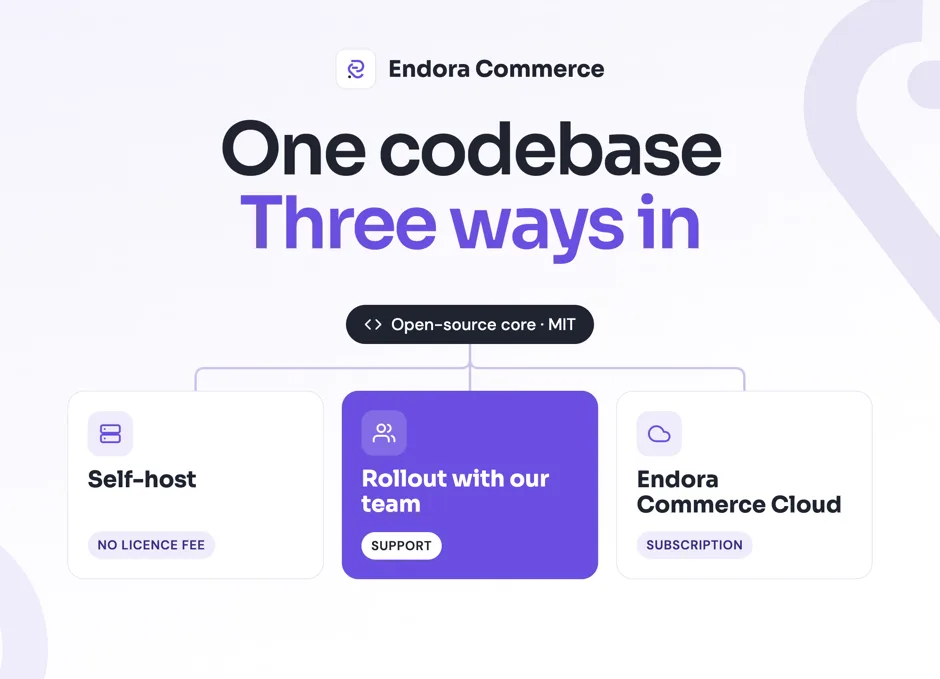
Self-hosting, a guided rollout or Cloud: how to choose your way into Endora Commerce
One codebase, three ways in: when self-hosting Endora Commerce pays off for a B2B company, when a rollout with Endora's team does, and when Cloud fits.
Read more
Endora Commerce under the MIT licence: what open code changes when you choose a B2B platform
Endora Commerce is now open source under MIT. What it means for a B2B company: code ownership, paid modules, and self-hosting vs a rollout vs Cloud.
Read more
Google Ads for B2B: how to optimize campaigns for lead quality
How to set up conversions, assign value to leads and connect CRM data so that your B2B Google Ads campaigns stop optimizing for the number of forms and start optimizing for real sales.
Read more
Why I Started the Manufaktura E‑commerce Podcast
Michał Zabielski on how the Manufaktura E‑commerce podcast started, who it's for, and what episodes you'll find. 22 episodes about building B2B platforms.
Read more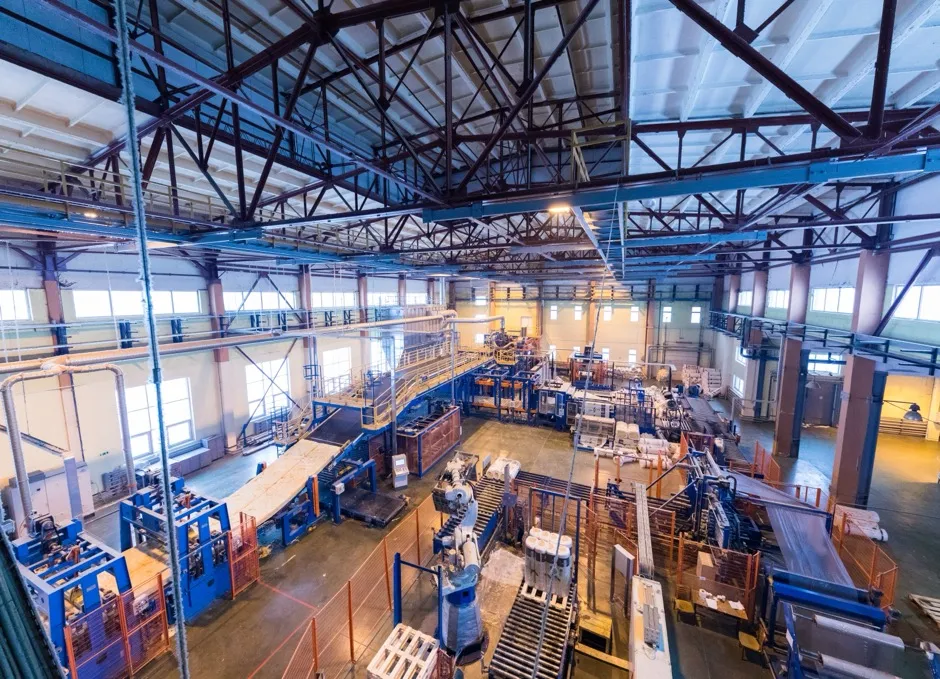
A B2B Sales Platform for Manufacturing: ERP, PIM and Online Sales in One Place
A B2B sales platform for manufacturing brings ERP, PIM and online sales into one process. See how industrial companies can sell online without data chaos.
Read more
Endora Commerce features: which modules a rollout starts with
How we match Endora Commerce modules to a B2B company’s processes: pricing, orders, warehouses and channels. The full catalog is on the product site.
Read more
Endora Commerce industries: how we match a rollout to your business
How we tailor an Endora Commerce rollout to the industry: manufacturing, technical distribution, wholesale, MRO, building materials and automotive parts.
Read moreHave a specific challenge?
Don't just read about it - let's talk about your case.