
A B2B Sales Platform for Manufacturing: ERP, PIM and Online Sales in One Place

Author: Justyna Brończyk
Key Projects Lead
· 6min read
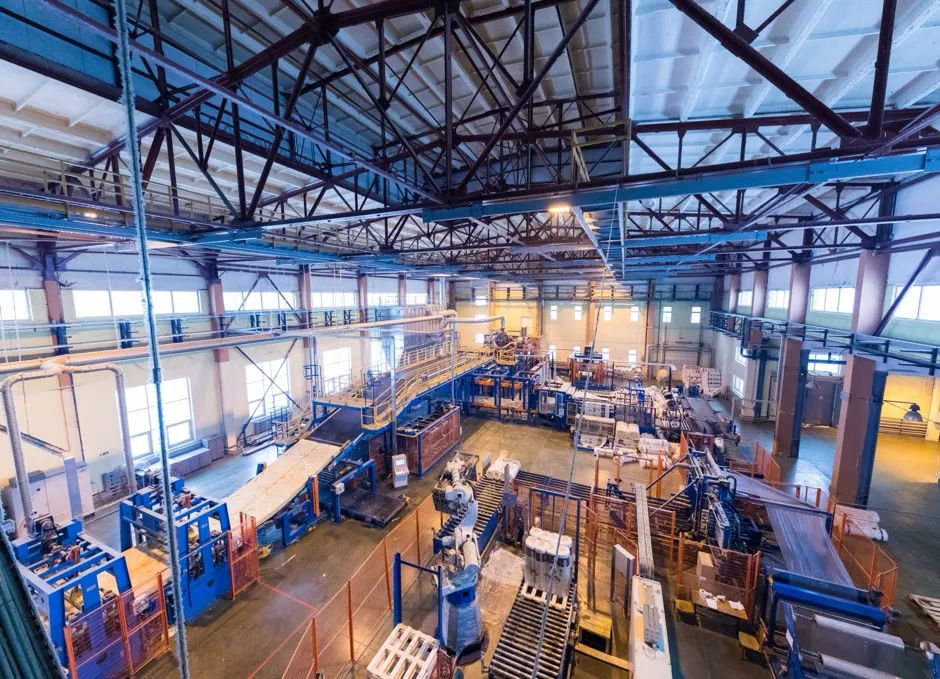
A B2B sales platform for manufacturing rarely starts with an empty catalog. It usually starts with a spreadsheet, an ERP nobody wants to touch, and the question of whether selling online will clash with the distributor network the business was built on.
What is a B2B sales platform for manufacturing?
A sales platform for the manufacturing industry differs from a retail store in one way: product and trade data doesn’t live in the platform itself, it’s scattered across ERP, spreadsheets and people’s heads. A manufacturer has per-customer prices and discounts in an ERP system (Comarch, Enova, Subiekt), a technical catalog with parameters in a PIM or a spreadsheet, and orders that need handling both online and through a sales rep.
A good platform doesn’t duplicate that data, it syncs it with a single source of truth. I see it in every project in this industry: companies that try to enter price lists and stock levels by hand in two places sooner or later end up with a mismatch, and the customer notices it first.
How can industrial and manufacturing companies start selling online?
The question of moving manufacturing sales online comes up most often with one reservation: fear of channel conflict with the distributor network. That’s a reasonable concern, but the answer isn’t skipping online sales, it’s a multi-channel strategy where the platform supports distributors instead of competing with them.
In practice that means different price lists and product visibility per channel, the ability to route inquiries to the right distributor instead of selling direct where the network already covers the ground, and a shared product catalog as the single source of truth across every channel at once. Industrial companies selling across several European markets also run into a second question: how to get multilingual support and search visibility right on every market, not just the home one.
How do trade platforms for industry differ from retail platforms?
Trade platforms for industry handle scenarios a retail store never will:
- Configurable products and variants: a customer wants to see a product in their own space, or configure it from dozens of variants before ordering, a standard catalog can’t carry that.
- Per-customer pricing and discounts: every account has different trade terms, and recalculating price lists by hand as the customer base grows leads to errors and frustrated sales reps.
- A technical catalog integrated with PIM: product data, attributes and technical documentation update automatically, instead of requiring manual work from several people on every change.
- Multilingual support with proper SEO: hreflang, x-default and the technical SEO foundations, not just a translated interface.
- RFQ and orders outside the standard cart: a request for a quote on a non-standard configuration or a larger batch stays in the system, not in a sales rep’s inbox.
What does implementing a B2B platform for a manufacturer look like?
The scope depends on how many systems need connecting, but the pattern repeats: a workshop mapping the sales process and data sources, ERP and PIM integration as the foundation, and only then the catalog and buying journey. For an electrical equipment manufacturer, we fixed the SEO foundations and launched an 8-language catalog integrated with PIM, I wrote it up in the product catalog with PIM case study. For the DKM Power Transmission sales platform, the result was a 2 percentage point conversion increase, details in the DKM Power Transmission case study.
If you’re starting from scratch, Endora Commerce, our native B2B platform, ships with a flexible per-customer pricing engine, RFQ and ERP integration ready from day one, and the first prototype tailored to your industry is ready in 4 weeks.
What’s the takeaway?
- A B2B sales platform for manufacturing wins on ERP and PIM integration, not on the number of storefront features, without connected data no platform shows accurate prices and stock.
- Selling online in industry doesn’t have to mean conflict with distributors, if the platform is designed from the start with channels that cooperate instead of compete.
- Trade platforms for industry differ from retail ones mostly where a retail customer never goes: configurators, per-customer pricing, technical catalogs.
Have a good one!
Wondering how to bring ERP, catalog and online sales together at your company? Get in touch with Endora, we’ll review your process and show you where to start. See how we approach B2B platforms for industry and manufacturing, and the full overview of industries where Endora Commerce works.
Keywords: B2B sales platform for manufacturing, manufacturing online sales, industry online sales, trade platforms for industry, B2B platform for manufacturers, selling online in industry, ERP integration with a sales platform, technical catalog PIM
Our services
Full-spectrum B2B e-commerce support
Keep reading
Recently published

Why I Started the Manufaktura E-commerce Podcast
Michał Zabielski on how the Manufaktura E-commerce podcast started, who it's for, and what episodes you'll find. 22 episodes about building B2B platforms.
Read more
Endora Commerce Features: an Overview of the Whole B2B Platform
A complete overview of Endora Commerce features across 10 areas: sales, catalog, pricing, warehouse, channels, AI and more. See what the B2B platform does.
Read more
Endora Commerce Industries: an Overview of 6 B2B Sectors
Endora Commerce for 6 B2B industries: manufacturing, technical distribution, wholesale, MRO, building materials, automotive parts. Which profile fits your business?
Read more
A B2B Platform for Distributors: Pricing, RFQ and ERP Integration
A B2B platform for distributors differs from a standard online store: per-customer price lists, RFQ and ERP integration. See which features you actually need.
Read more
Software for the Automotive Industry: Website, B2B System and Rollout
Software and a website for the automotive industry are more than an e-commerce template. See how to order a B2B system for a dealer or parts distributor.
Read more
Endora Commerce integrations: an overview of all 23 connections to external systems
23 Endora Commerce integrations in one place: payments, ERP, KSeF, AI, analytics and infrastructure. Find out what connects to your stack.
Read more
Endora Commerce vs other B2B platforms: comparing 12 e-commerce systems
12 comparisons of Endora Commerce against Shopify, Magento, WooCommerce and other B2B platforms in one place. Find the system that fits your business.
Read more
Magento Agency in Poland: How Endora Builds B2B Commerce That Scales
Looking for a Magento agency in Poland? Endora builds and maintains B2B Magento stores with ERP and PIM integrations for manufacturers and distributors.
Read moreHave a specific challenge?
Don't just read about it - let's talk about your case.