
An e‑commerce audit is only the beginning. Real consulting starts with observation

Author: Justyna Brończyk
Key Projects Lead
· 6min read

For more than 12 years at Endora we have been running e‑commerce audits and advising B2B companies on how to grow their online sales. In that time we have delivered over 120 projects for clients from five countries, and every audit teaches us the same lesson: most mistakes are not made during implementation. They are made earlier, when someone proposes changes before understanding how the company actually works.
How is an e‑commerce audit different from e‑commerce consulting?
The two terms are often used interchangeably, but in practice they are two different stages of working together.
- E‑commerce audit: a one-off, in-depth diagnosis. We look at five areas: SEO, UX, technology, sales processes and security, and at the end you get a report with a list of priorities.
- E‑commerce consulting: ongoing work, not a one-off report. Regular support with decisions such as choosing technology, analysing data and planning B2B sales growth.
- E‑commerce process optimization: putting into practice what comes out of the audit and consulting, for example changes to the purchase path, order automation and better conversion.
You can order the audit on its own to get an independent assessment of your platform before a big decision. You can also start ongoing consulting if you need a partner to talk strategy with, not just a contractor working through a task list.
Why do we start with observation, not a revolution?
I believe the worst thing you can do at the start of a project is to propose major changes before you understand why the company works the way it does. I have seen projects where the contractor came in with a ready-made plan to rebuild the system because “that’s how it’s done now”, and they ended badly because nobody had asked why a given process looked the way it did. Sometimes the reason is technical. More often it is a business one: a legal requirement, a wholesale customer’s demand, or an old management decision that nobody new knows about.
That is why every e‑commerce audit and every B2B consulting engagement starts the same way:
- Initial consultation: we get to know the business, its goals and its real challenges before anyone makes the first technology recommendation.
- Data analysis and testing: we go through GA4, heatmaps, usability tests and a technical audit, so that data replaces opinions.
- Report and recommendations: we prioritise actions by their real impact on sales, not by what would be most interesting to build.
- Implementing the changes: you can hand them over to us or do them with your own team, using a ready plan.
- Post-implementation support: we monitor the results, because an audit without checking the outcome is just a document in a drawer.
It is the same principle I wrote about in the article on building solutions around the company’s business processes, not the other way around. It does not change whether we are talking about a single module or a whole sales platform.
An audit that really changed the results: the DKM Power Transmission case
Rather than talk theory, let me show you the numbers. DKM Power Transmission, a manufacturer of solutions for the machinery industry, came to us with an unstable Magento platform, slow delivery of changes and a high cart abandonment rate.
Before we proposed a single change, we audited the purchase path and found specific bottlenecks: an overly complicated process for entering order details, no link between the payment method and the delivery option, and infrastructure the client had no control over. Only then did we plan the changes.
After two years of working together:
- Conversion went up by 2 percentage points thanks to an optimised purchase path and better UX.
- The client regained full control of its infrastructure after moving to a new server setup.
- New features ship much faster, because processes stopped being a bottleneck for development.
The company’s owner, Andrzej Grączewski, summed it up like this: “Before we started working together, we were struggling with an unstable platform and a complicated buying process that put our customers off. Thanks to the changes and moving the store to new infrastructure, we not only regained full control of the system, but above all we increased our conversion rate.”
When data lives with people, not in a system: the samochodowy.pl case
Not every project starts with an audit of an existing platform. Sometimes observing processes is not only about technology, but also about how the sales team really works. Samochodowy.pl, a leasing brokerage, came to us with a completely different problem from DKM: several dozen sales reps managed leads by phone and email, leasing applications were retyped by hand into Excel, and management had no view of sales results or conversion. Information about the team’s work was scattered across people, not stored in a system.
Before we designed a single screen, we ran a separate discovery for each of the six modules of the future CRM, because sales reps and the sales support team have very different needs. Only on that basis did we build an analytics module that shows management, in real time, each rep’s results, lead conversion and an analysis of sales calls, including critical issues that need a response.
The result:
- 6 CRM modules built from scratch, tailored to the roles of sales rep, sales support and administrator.
- Zero spreadsheets in the leasing application process after go-live.
- Sales call and conversion analysis available in real time, instead of reports put together by hand every now and then.
Why we like sharing knowledge, not just selling hours
Part of our team regularly shares what they know, instead of keeping it only for clients who have already signed a contract. Michał Zabielski, our CEO, hosts the Manufaktura e‑commerce podcast, where he talks about the realities of building online sales. I write on the Endora blog about topics such as the relationship between a client and a service provider, because I think good e‑commerce consulting starts with trust, and trust is built with knowledge, not promises.
In my view, a company that can explain why it recommends a particular solution, instead of just saying “trust us”, builds a relationship that lasts longer than one project. You can read more about the team behind this approach on our about us page.
When should you order an audit, and when ongoing consulting?
If you need a one-off, independent assessment of your platform before a big decision, such as a development budget, a change of technology or entering a new market, start with an e‑commerce audit. You will get a report with clear priorities across five areas, ready for any team to implement.
If you are looking for a partner for ongoing work on strategy, data analysis and technology decisions, e‑commerce consulting and analysis is the better fit. It suits growing companies that regularly need a second opinion backed by data, not just a one-time diagnosis.
Once you know what to fix and want it done without involving your own development team, the next step is e‑commerce process optimization.
So what is the takeaway?
- An e‑commerce audit only makes sense if someone actually implements the recommendations afterwards. A report on its own changes nothing.
- Good B2B e‑commerce consulting starts with questions, not ready-made answers.
- Observing processes before proposing changes saves more money than it costs.
- It is worth checking whether the company you are talking to about an audit can show real numbers from previous projects, not just promises.
Have a good day!
Keywords: e‑commerce audit, e‑commerce consulting, B2B e‑commerce consulting, e‑commerce process optimization, SEO audit, UX audit, technology audit, e‑commerce data analysis
Our services
Full-spectrum B2B e‑commerce support
B2B sales platforms on Magento, Shopware, Sylius and Endora Commerce: per-customer price lists, RFQ, a customer portal and ERP integration.
Implementation of ERP and PIM SystemsERP and PIM implementation and integration (Pimcore, Akeneo, Ergonode) for online sales: one source of product data, prices and stock for your store and marketplaces.
E‑commerce Consulting and AnalysisB2B e‑commerce consulting: online sales strategy, platform selection, implementation roadmap and data analytics (GA4, Power BI, Looker Studio). Decisions based on data, not gut feeling.
Keep reading
Recently published

How much does a B2B platform cost? What goes into implementation and running costs
The licence is only the start. What a B2B platform really costs: implementation, integrations, migration and maintenance. How to compare quotes and work out TCO.
Read more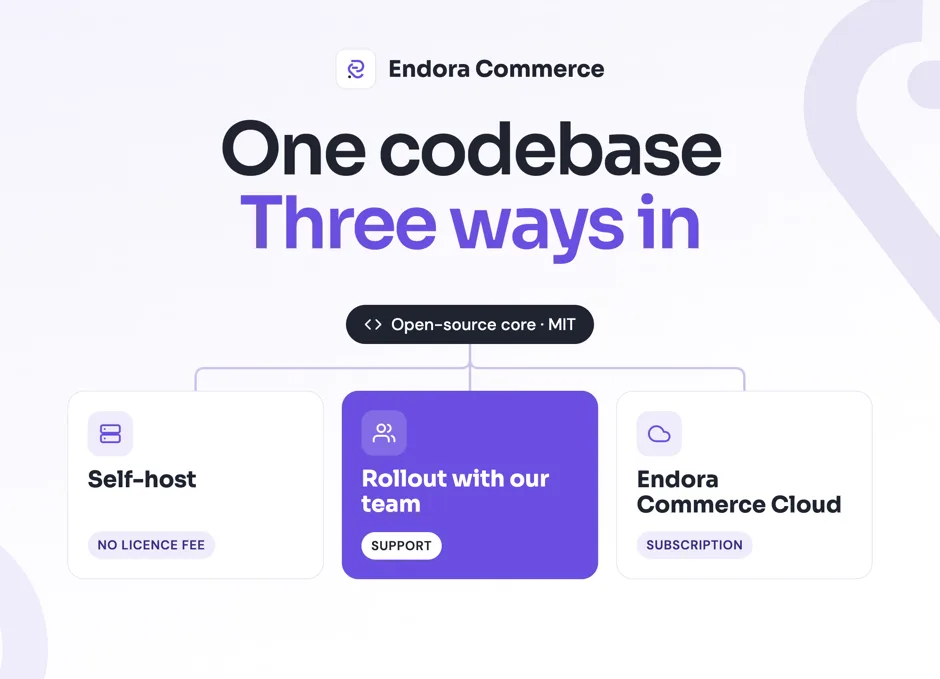
Self-hosting, a guided rollout or Cloud: how to choose your way into Endora Commerce
One codebase, three ways in: when self-hosting Endora Commerce pays off for a B2B company, when a rollout with Endora's team does, and when Cloud fits.
Read more
Endora Commerce under the MIT licence: what open code changes when you choose a B2B platform
Endora Commerce is now open source under MIT. What it means for a B2B company: code ownership, paid modules, and self-hosting vs a rollout vs Cloud.
Read more
Google Ads for B2B: how to optimize campaigns for lead quality
How to set up conversions, assign value to leads and connect CRM data so that your B2B Google Ads campaigns stop optimizing for the number of forms and start optimizing for real sales.
Read more
Why I Started the Manufaktura E‑commerce Podcast
Michał Zabielski on how the Manufaktura E‑commerce podcast started, who it's for, and what episodes you'll find. 22 episodes about building B2B platforms.
Read more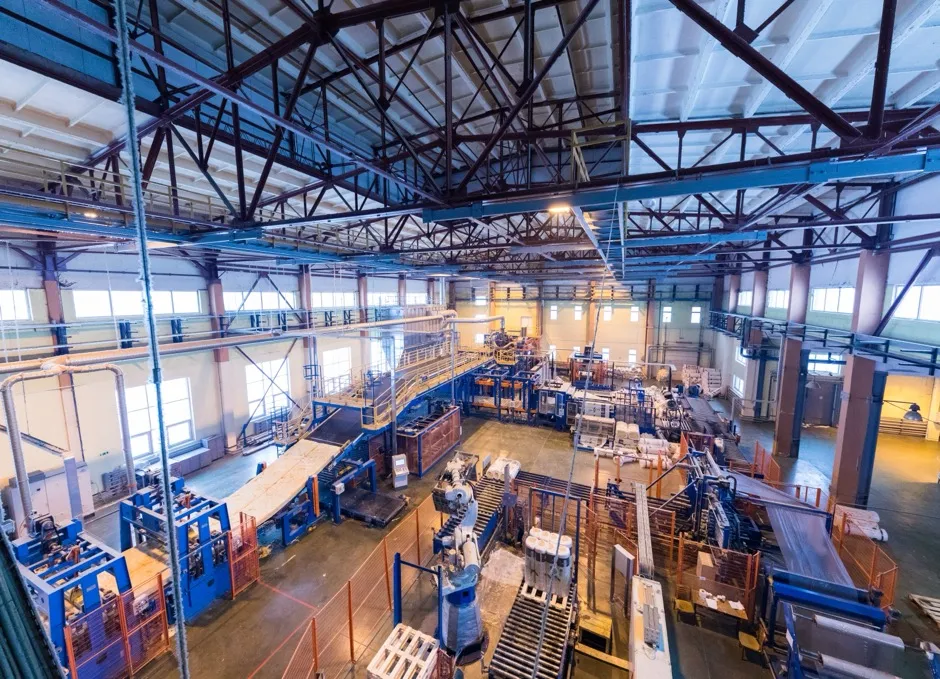
A B2B Sales Platform for Manufacturing: ERP, PIM and Online Sales in One Place
A B2B sales platform for manufacturing brings ERP, PIM and online sales into one process. See how industrial companies can sell online without data chaos.
Read more
Endora Commerce features: which modules a rollout starts with
How we match Endora Commerce modules to a B2B company’s processes: pricing, orders, warehouses and channels. The full catalog is on the product site.
Read more
Endora Commerce industries: how we match a rollout to your business
How we tailor an Endora Commerce rollout to the industry: manufacturing, technical distribution, wholesale, MRO, building materials and automotive parts.
Read moreHave a specific challenge?
Don't just read about it - let's talk about your case.