
Teraki: developing the corporate website of an edge AI company
A year and a half of remote work with a German edge AI company: Hugo website development, changes on staging usually within a day and 85 pull requests.
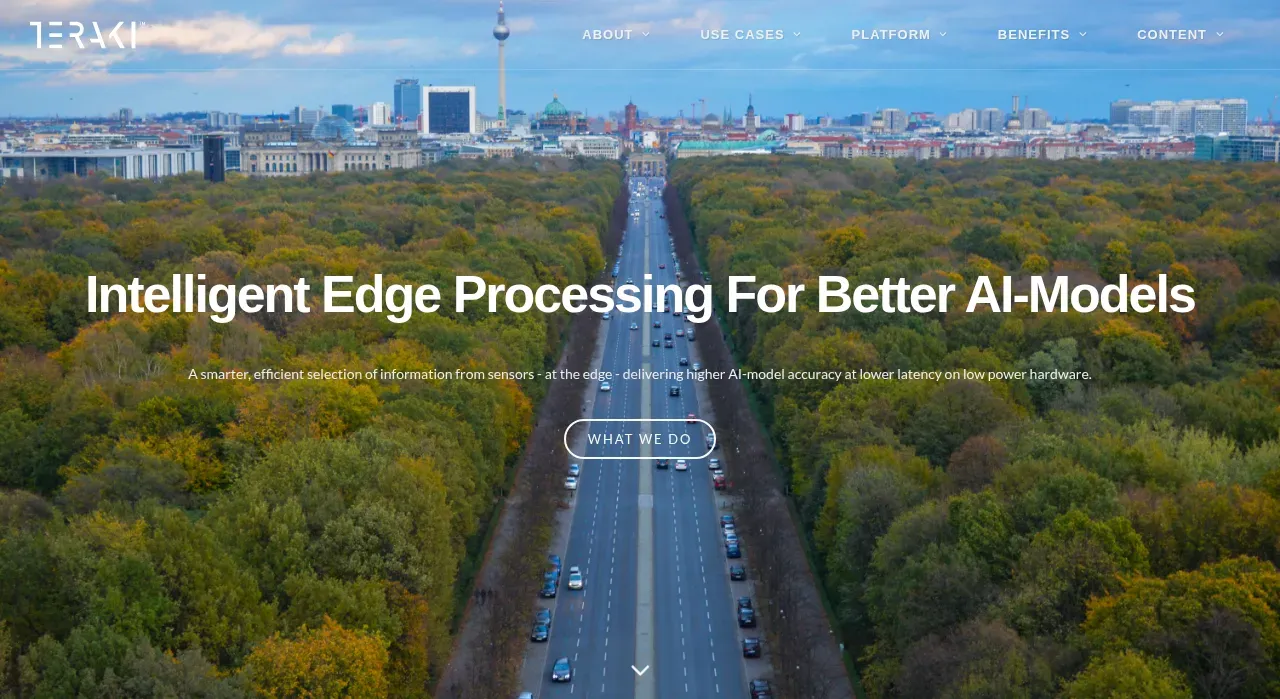
- 1.5 years
- of continuous website development
- < 2 days
- median from starting work on a change to production deployment
- 85
- pull requests merged after our review
- 4
- Endora people on the project
- Client
- TERAKI GmbH
- Industry
- AI software for sensor data processing at the edge, automotive and autonomous mobility
- Scope
- Hugo template development, new homepage and product pages, blog and news, materials gallery, webinars, legal pages and cookie consent, code review and deployments
- Cooperation period
- July 2019 - February 2021
- Technologies used
- HugoJavaScriptHTMLCSSAWS
Teraki is a Berlin-based company with an office in Tokyo that builds AI software for pre-processing sensor data at the edge. Its solutions select only the relevant information from telematics, video and 3D point cloud data, so AI models in vehicles, delivery robots or drones run more accurately on less powerful hardware. Teraki’s partners include Infineon, NXP and Arm.
A client from Germany, fully remote cooperation
Teraki is one of our international clients: a company headquartered in Berlin with an international team. We ran the whole cooperation remotely and in English, inside the client’s process: code in their Bitbucket repository, pull requests following their gitflow, approval on their staging environment. We worked directly with the Teraki team, with no intermediaries, and we made sure every request quickly turned into a working page.
The speed was measurable. The median time from the last commit to deploying a change on staging was 14 hours, and 48 of 85 pull requests got there within a day. Checking a change on staging usually took no more than an hour, and the CI/CD pipeline deployed it to production in a few minutes. As a result, the median time from starting work on a change to its production deployment was under 2 days, and 75 of 85 changes made that journey in under a week. When Teraki changed its company messaging in August 2020, we merged 21 pull requests with the new homepage and pages in a single month. Teraki kept giving us new work for a year and a half.
The Teraki team built its corporate website on the Hugo static site generator in 2018. From July 2019 to February 2021 we developed it together with them: our team was responsible for templates, new sections and pages, while Teraki’s marketing team supplied the content.
A new homepage: from data compression to an edge AI platform
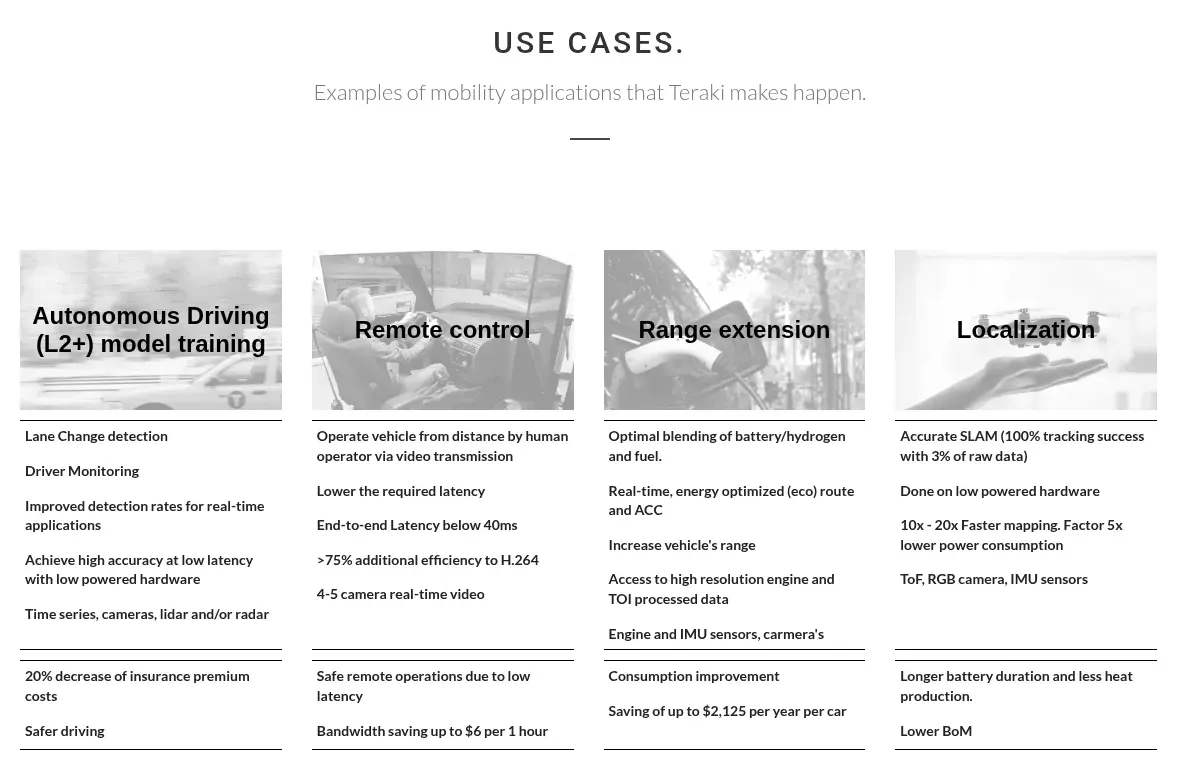
In August 2020 we rebuilt the homepage around the company’s new messaging. We added a slider with four use cases, new platform and benefits sections and a separate page for each application. Every tile shows what the use case gives the customer, such as lower latency in remote control or savings on energy costs.
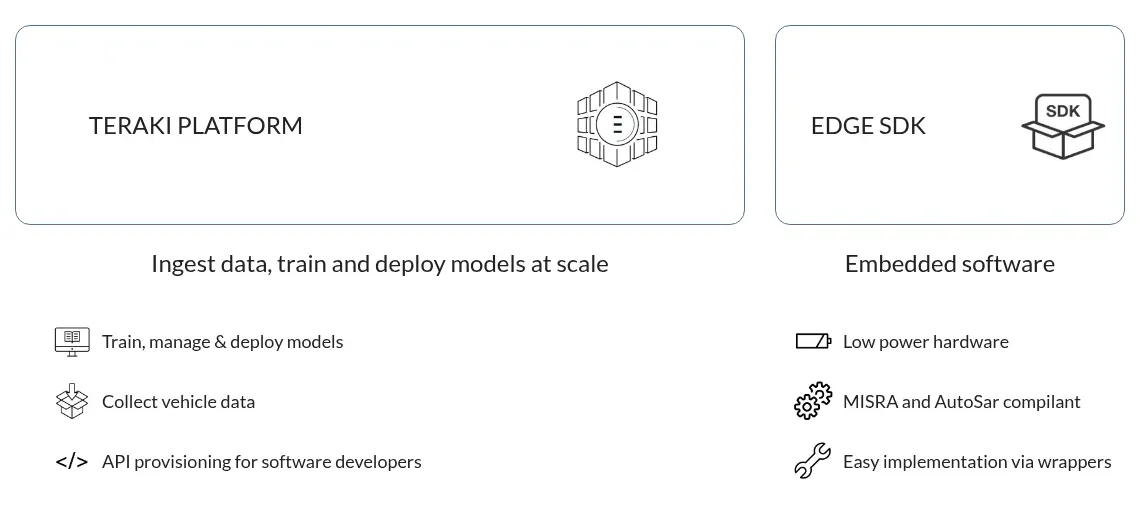
The platform section separates two products: a platform for collecting data, training and deploying models, and the Edge SDK for embedded software. Both tiles link to detailed pages.
Use case and product pages
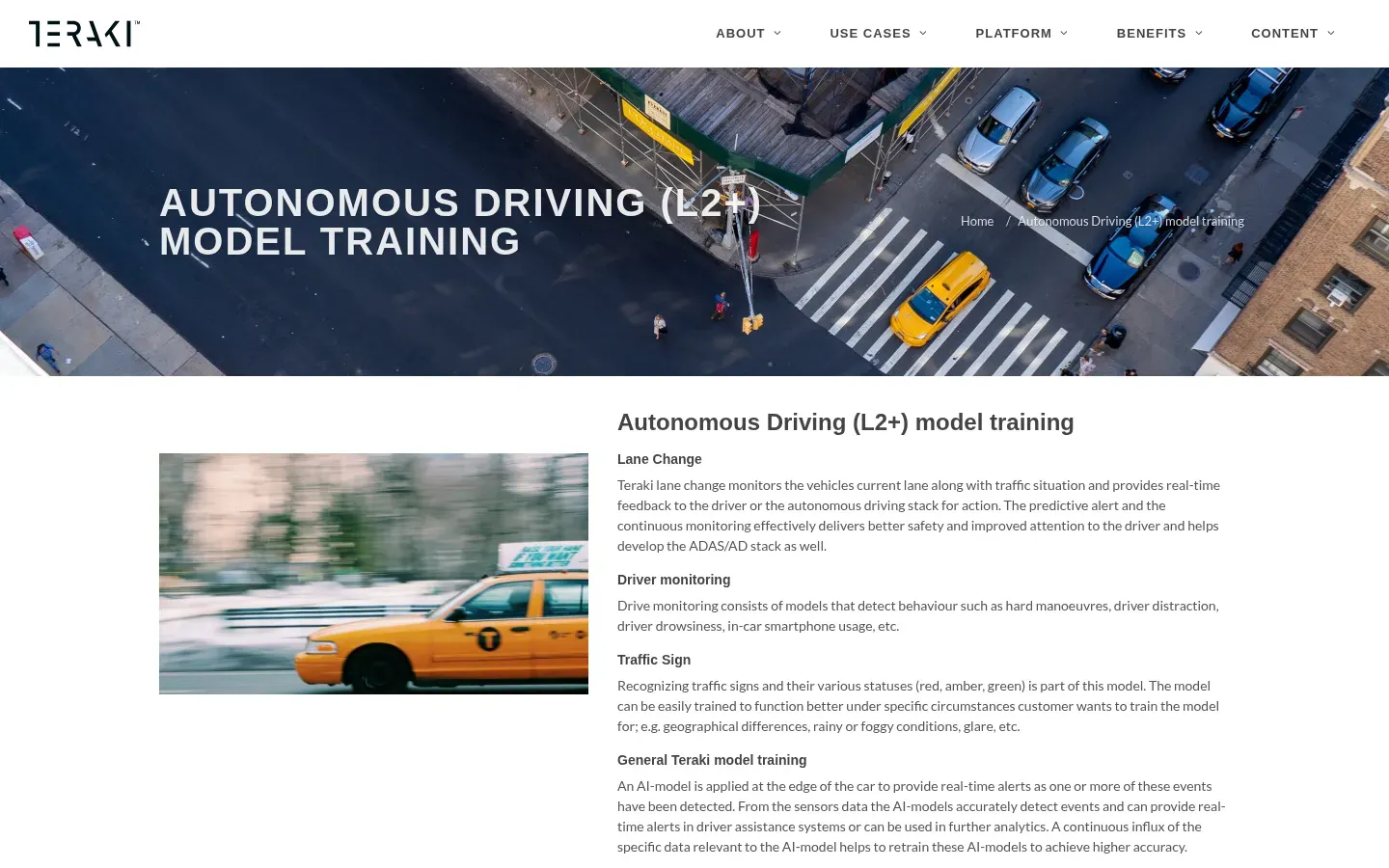
Every use case and product has its own page built on a shared layout: banner, description and related materials. A new page did not need a new template, just a Markdown file with content.
Blog, news and the materials gallery
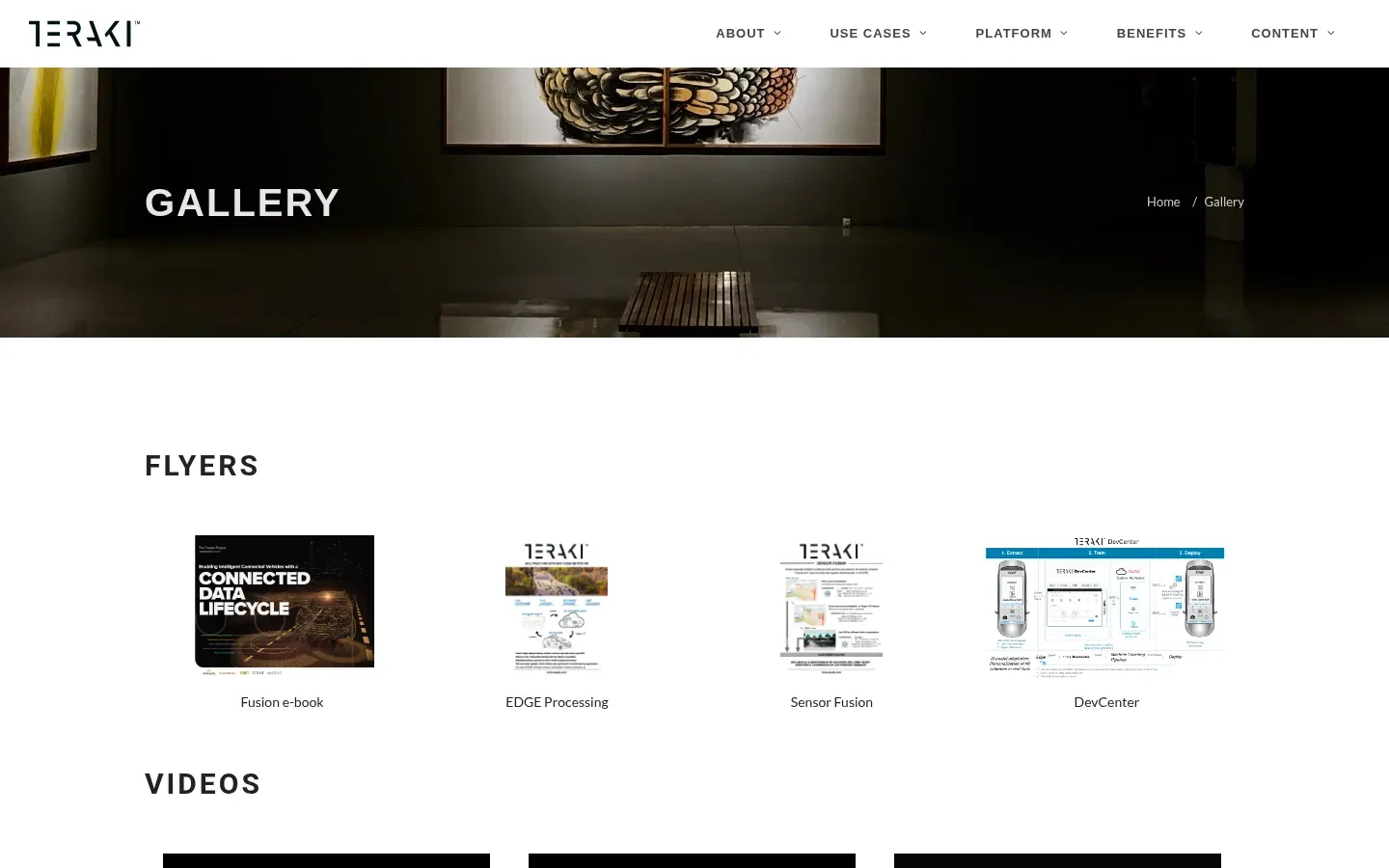
We moved the blog and news into separate folders and their entry data into configuration files. Entries have pagination, automatic previous/next navigation, share buttons and an author section that disappears when no author is set. In the gallery, flyers and videos have a preview, zoom and a download button, and the webinar page collects recordings and PDF presentations.
Partners and credibility
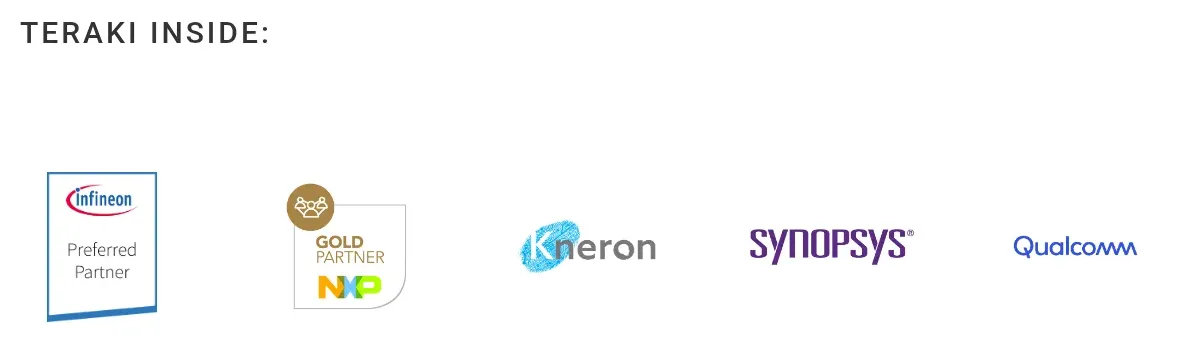
For a company selling technology to vehicle and chip manufacturers, partner logos are a strong argument. We built the “Teraki inside” and investors and awards sections as sliders where a new logo takes a single file, as we did for the Siemens, IWPC and Arm partnerships.
Technology stack
The site is built with Hugo, using the Canvas theme extended with custom templates, shortcodes and styles. A Bitbucket pipeline builds it on every merge and publishes it to Amazon S3 behind CloudFront, separately for the testing, staging and production environments. Have a website or platform that needs further development without a rewrite from scratch? See how we handle platform maintenance and development, or let’s talk about your project.
Diagnosis
What needed sorting out?
Content outpacing templates
The Teraki team regularly published posts, news, flyers and webinar recordings. Some documents landed in the repository as plain HTML, and every new content type required manual fixes.
An offer in motion
In 2020 Teraki shifted its messaging towards a platform for training AI models and an Edge SDK. The homepage and navigation had to present the new use cases and products.
Consent and privacy
A German company needed complete legal pages, including documents for applicants and employees, and cookie consent that decides whether analytics runs at all.
A multi-environment process
Changes went through Bitbucket pull requests, a staging environment for approval and only then production. Our work had to fit that rhythm.
Solution
What we built on Hugo
New homepage
Hero, company and platform sections, a use case slider, a benefits section, “Teraki inside” logos and investors and awards, with a mobile version of every section.
Product and use case pages
Platform, Edge SDK, visualization and four use cases: model training for autonomous driving, remote control, range extension and localization.
Blog and news
Content moved into separate folders, lists with pagination and date sorting, automatic navigation between entries, share buttons and an author section.
Materials gallery
Flyer and video pages with preview, zoom and file download, plus a webinar page with recordings and PDF presentations.
Legal pages and cookies
A privacy policy with English and German subpages and a consent dialog where users decide about Google Analytics. Analytics collects data only after consent.
Shortcodes for editors
A set of Hugo shortcodes for images, columns, download buttons and galleries, so the Teraki team could write posts in Markdown instead of HTML.
How we worked
Feature branch, staging, production
- 01
Task and branch
Every change started with a ticket and its own feat/… branch, following the gitflow described in the client’s repository.
- 02
Pull request and review
Changes went to the staging branch via pull request. After review we usually merged them the same or the next day and resolved conflicts with the Teraki team’s parallel work.
- 03
Approval on staging
A merge to staging triggered a Bitbucket pipeline that built the site with Hugo and deployed it to a separate environment for review.
- 04
Deployment
Once approved, staging was merged into master and the pipeline published the static files to Amazon S3 and invalidated the CloudFront cache.
Results
What did Teraki gain?
- ✓ A homepage and navigation aligned with the new offer: a model training platform and an Edge SDK
- ✓ Editors publish posts, news, flyers and webinars in Markdown, without hand-written HTML
- ✓ Analytics that starts only after user consent, and a complete set of legal pages
- ✓ A fast static site served from S3 and CloudFront, with no application server to maintain
- ✓ Fast fixes: 48 of 85 pull requests reached staging within a day of the last commit
- ✓ A steady pace of change for a year and a half, regardless of borders and time zones
See next
More case studies
New sales platform
Endora Commerce: 12 years of B2B rollouts in one platform
How the Endora core team turned 120+ B2B rollouts into Endora Commerce: open source under the MIT licence, 80 modules and a live demo you can test.

Platform migration
DKM Power Transmission. Sales Platform
From an unstable platform and abandoned carts to a 2 pp conversion increase.
Have a specific challenge?
Don't just read about it - let's talk about your case.