
Pantimanti: a SaaS platform where brands open their own merch stores
We took over the Pantimanti platform, rebuilt its multi-tenant architecture and developed it for 3.5 years. One codebase runs the stores of all clients.
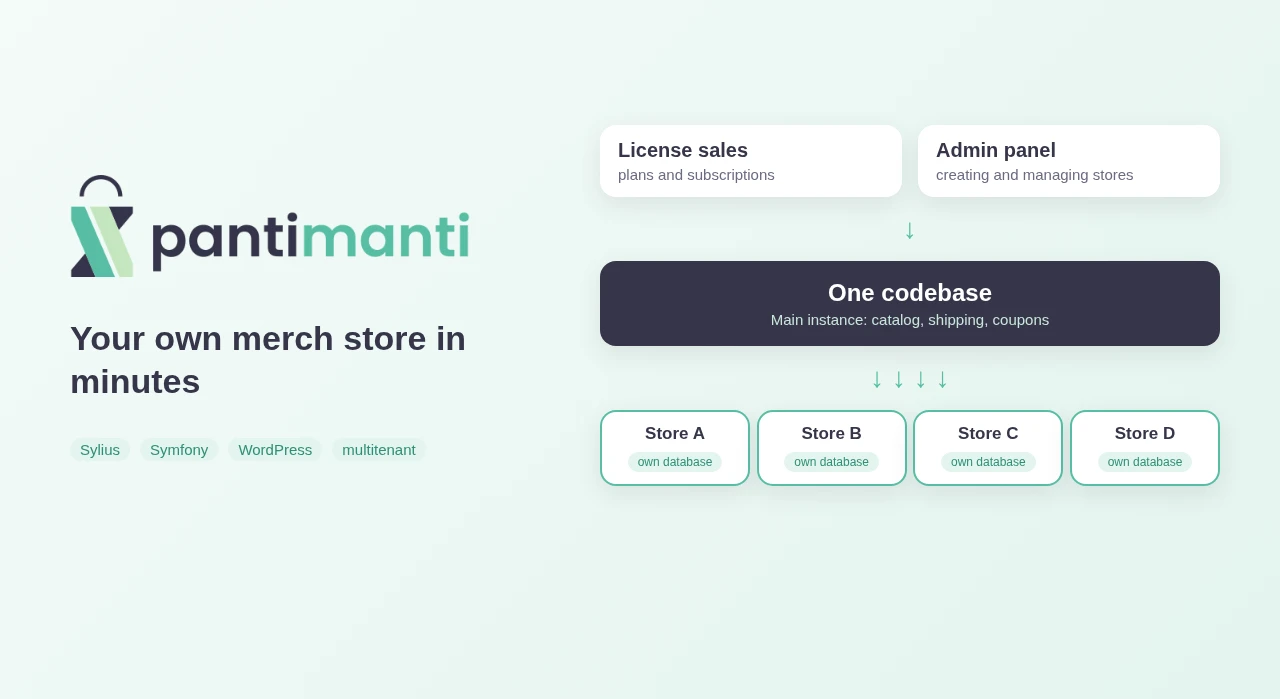
- 3.5 years
- of work on the platform, from May 2022 to December 2025
- 1
- codebase for the stores of all clients
- 3
- applications maintained and developed: license sales, admin panel and store engine
- ≤ 10 min
- for a Pantimanti client to launch their own store
- Client
- Pantimanti (Shoppery sp. z o.o.)
- Industry
- SaaS e‑commerce, logo clothing and gadget stores for brands, clubs and academies
- Scope
- Multi-tenant architecture audit and rebuild, data synchronization between instances, automatic store creation, license and subscription sales, admin panel, logo product creator, group orders, international shipping, coupons, CI/CD
- Cooperation period
- May 2022 - December 2025
Pantimanti is a Polish SaaS platform where brands, sports clubs, academies and creators open their own store with clothing and gadgets bearing their logo. The client picks a subscription plan, products and logo placements, sets a margin and shares the store on their website and social media. Pantimanti handles the rest: it takes the order, personalizes the product and ships it to the buyer, and the client earns on every completed order.
It is a model that lives on scale. From May 2022 to December 2025 we were responsible for the technology behind it: we took over the platform from the previous vendor, rebuilt its architecture and then developed it as the sole technology partner.
Taking over the project and auditing the architecture
The platform was started by another vendor, for whom the designed architecture proved too big a challenge. From May 2022 we worked on it in a white‑label model, and from February 2024 directly, as Endora.
We started with an audit. Based on it, we rebuilt the parts that the stability of the whole system depended on: the mechanism that runs many stores on one codebase and the data synchronization between the main instance and client stores. Only on a stable foundation could the Pantimanti team focus on what makes money: new features for clients.
One codebase, many stores
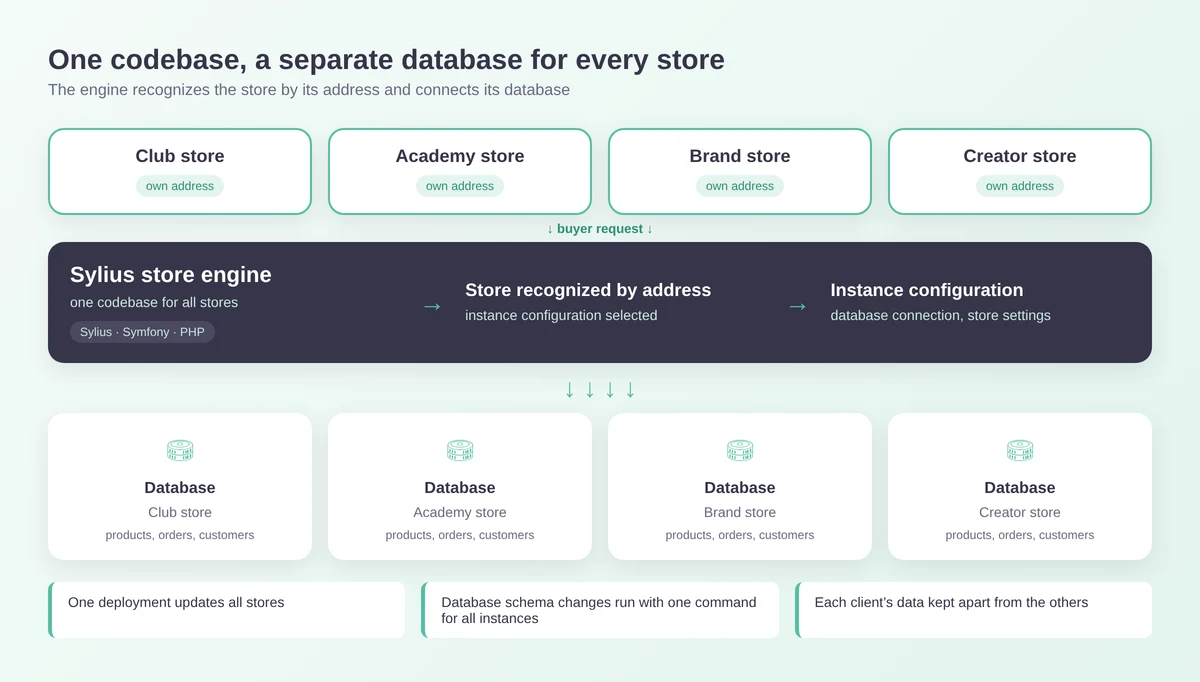
The heart of the platform is a Sylius store engine running in a multi-tenant model. All client stores use the same code and differ in data: every store has its own database, and the engine picks the database based on the store’s address. This approach is familiar from large SaaS platforms: clients are kept apart, and the team maintains one system.
For the business this means maintenance costs do not grow with every new client. A bug fix or a new feature reaches all stores with a single deployment, and database schema changes are run for all instances with a single command.
A store ready minutes after buying a license
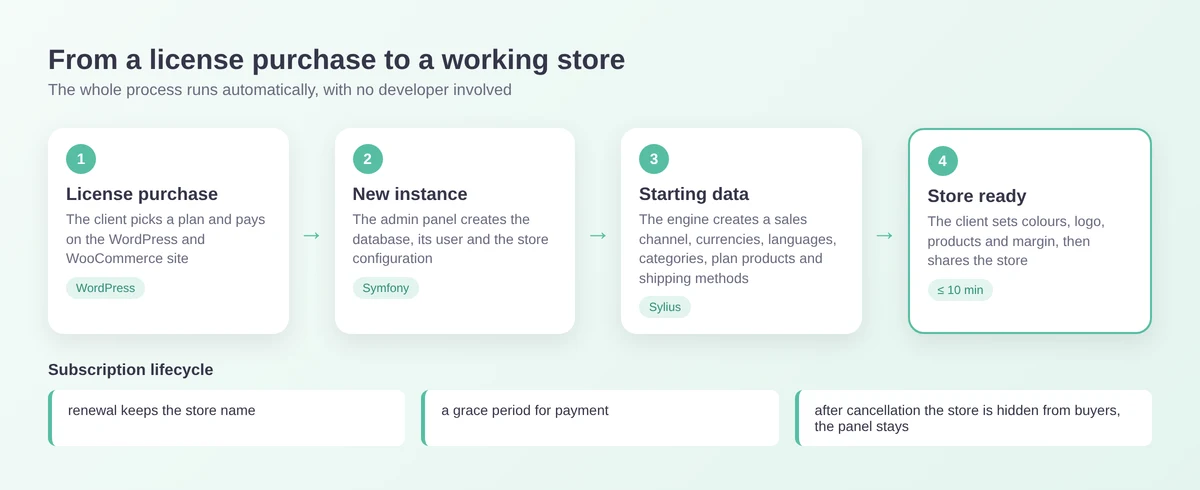
Clients buy a license on a WordPress sales site. In the background the admin panel creates their database and configuration, and the engine generates the starting data: a sales channel, currencies and languages, categories, the products available in the chosen plan and shipping methods. The client goes straight to their store settings: colours, logo, products and margin. According to Pantimanti, the whole setup takes no more than 10 minutes.
The same logic handles the subscription lifecycle. A renewal keeps the store name, a grace period gives the client time to pay, and after cancellation the store is no longer available to buyers, but the owner still has access to the panel and settlements.
A central catalog that reaches the stores on its own
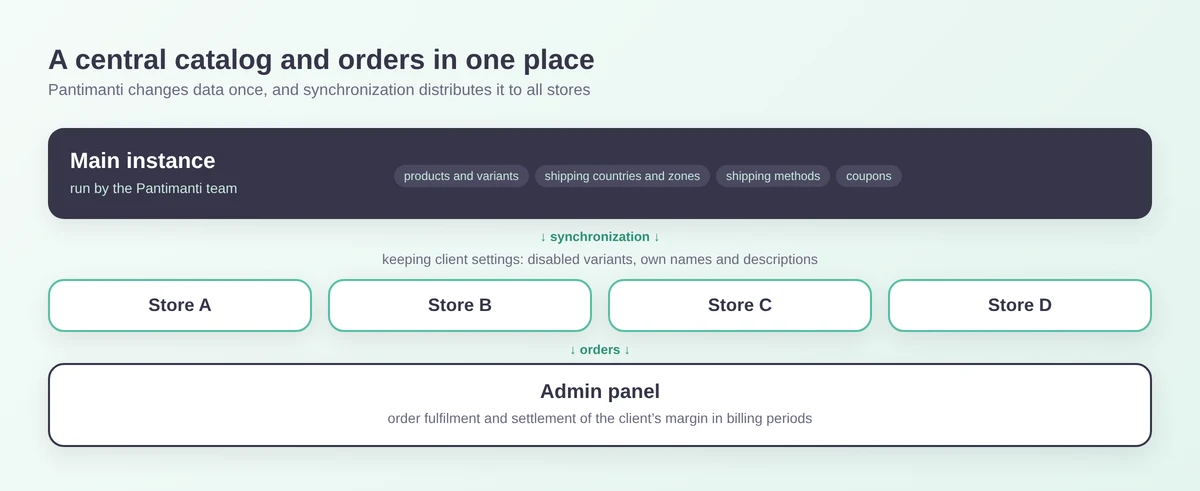
Pantimanti manages products, variants, shipping countries and zones, shipping methods and coupons in the main instance. Synchronization distributes them to client stores while keeping what clients set themselves: disabled variants, their own names or descriptions. Orders from all stores go back to the central system, where they are fulfilled, and the client’s margin is settled in billing periods.
As a result, a new product, a new shipping country or a coupon campaign takes one change instead of a visit to every store.
Features that increase sales
Once the platform was stable, we developed features for Pantimanti clients and their buyers: a product creator that visualizes the logo on clothing, group orders placed from the panel, recommended products on the store homepage, product description editing, international shipping, coupons, referral codes for license purchases and new subscription types.
Technology in the background
The platform consists of three applications: a license sales site on WordPress and WooCommerce, an admin panel on Symfony that creates and manages stores, and a multi-tenant Sylius store engine. Each has CI/CD for the test and production environments. Does your platform no longer keep up with the scale of your business? See how we handle platform maintenance and development, or let’s talk about your project.
Business challenge
What needed solving?
A model that lives on scale
Pantimanti earns on subscriptions and on the margin from sales. Every new client is a new store, so the cost and effort of launching and maintaining one store had to be close to zero.
An unstable foundation
The platform taken over from the previous vendor needed key parts of its architecture rebuilt, and stability, before it could keep growing.
A shared catalog, separate stores
Pantimanti sets the products, shipping and promotions, while every client has their own store, colours, logo and margin. Data had to reach all stores without manual work.
A store in minutes
A client buys a license and expects a working store straight away, without a developer and without contacting support.
Solution
One platform, many stores
One codebase for everyone
All client stores run on the same engine. A fix or a new feature reaches every store with a single deployment.
Separate data for each client
Every store has its own database, and the engine picks it by the store’s address. Client data is kept apart, as in SaaS platforms.
Stores created automatically
After a license purchase the admin panel creates the store’s database, configuration and starting data: a sales channel, categories, the products in the plan and shipping methods.
Synchronization from the main instance
The catalog, shipping countries and zones, shipping methods and coupons are managed centrally and synchronized to client stores.
A logo product creator
Clients choose products, colours and logo placements, and the store shows a ready visualization. Group orders from 10 pieces are placed from their own panel.
Licenses and subscriptions
Plan sales, renewals, a grace period, referral codes and automatic store shutdown after a subscription is cancelled, with access to the panel kept.
How we worked
From taking over the project to developing business features
- 01
Joining the project
From May 2022 we worked on the platform in a white‑label model, for a vendor for whom the designed architecture proved too big a challenge.
- 02
Audit and rebuild
We ran an audit and rebuilt the key parts: the multi-tenant mechanism and data synchronization between instances. The platform became stable.
- 03
The project under the Endora name
In February 2024 we took over the project directly. In the first weeks we moved the code to our repository and built CI/CD for the test and production environments of all three applications.
- 04
Product development
In 2024 and 2025 we developed features that increase sales and make operations easier: international shipping, referral codes, recommended products, coupons, subscription types and product description editing.
Results
What did Pantimanti gain?
- ✓ A stable platform where the team can develop the product instead of putting out fires
- ✓ A new client store is created automatically after a license purchase, with no developer work
- ✓ One deployment updates the stores of all clients, so maintenance costs do not grow with every new store
- ✓ The catalog, shipping and coupons changed in one place reach all stores
- ✓ Each client’s data in a separate database, kept apart from the others
- ✓ One technology partner responsible for the whole platform: license sales, the panel and the store engine
See next
More case studies
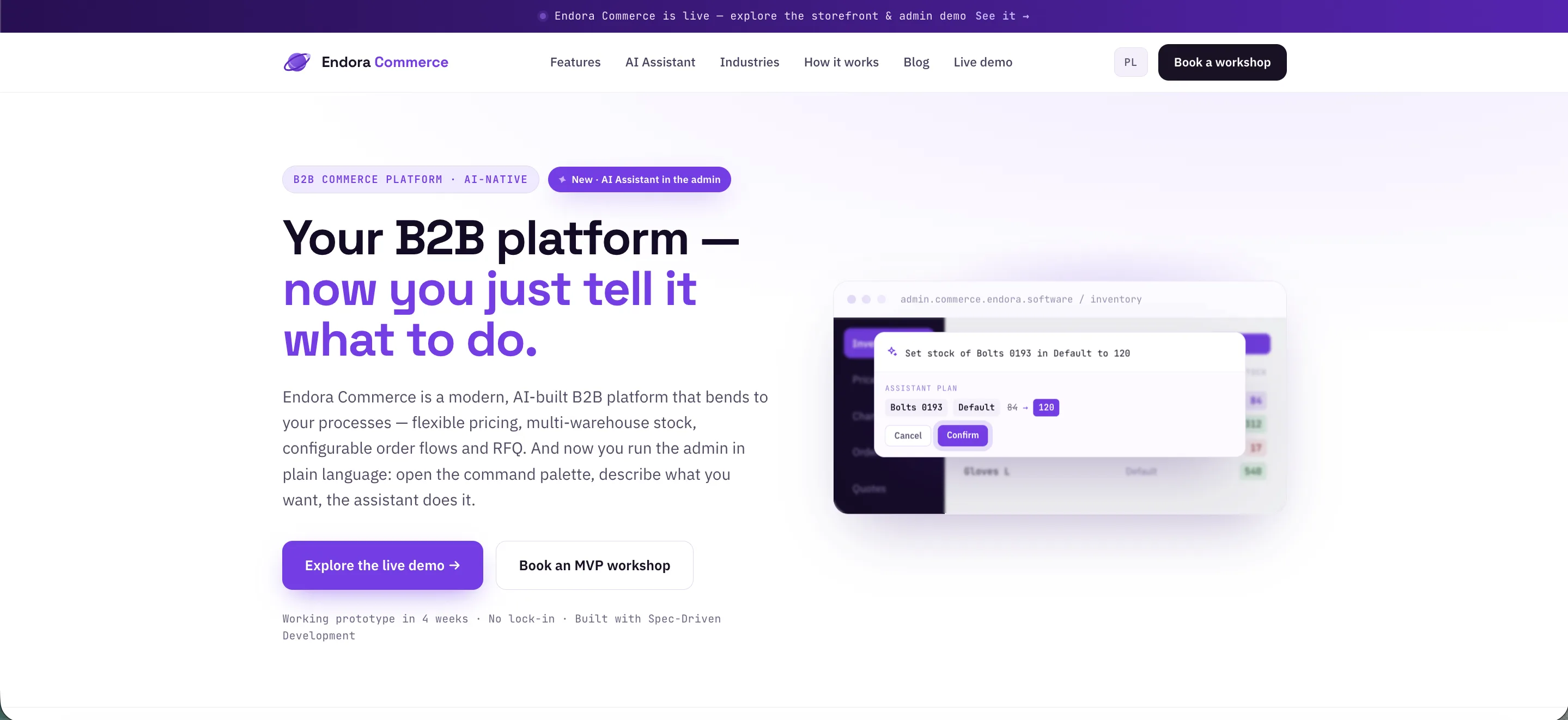
New sales platform
Endora Commerce: 12 years of B2B rollouts in one platform
How the Endora core team turned 120+ B2B rollouts into Endora Commerce: open source under the MIT licence, 80 modules and a live demo you can test.

Platform migration
DKM Power Transmission. Sales Platform
From an unstable platform and abandoned carts to a 2 pp conversion increase.
Have a specific challenge?
Don't just read about it - let's talk about your case.