
From Meeting Notes to Company Strategy - How AI Changed My Work as a PM Over Three Months

Author: Justyna Brończyk
Key Projects Lead
· 8min read
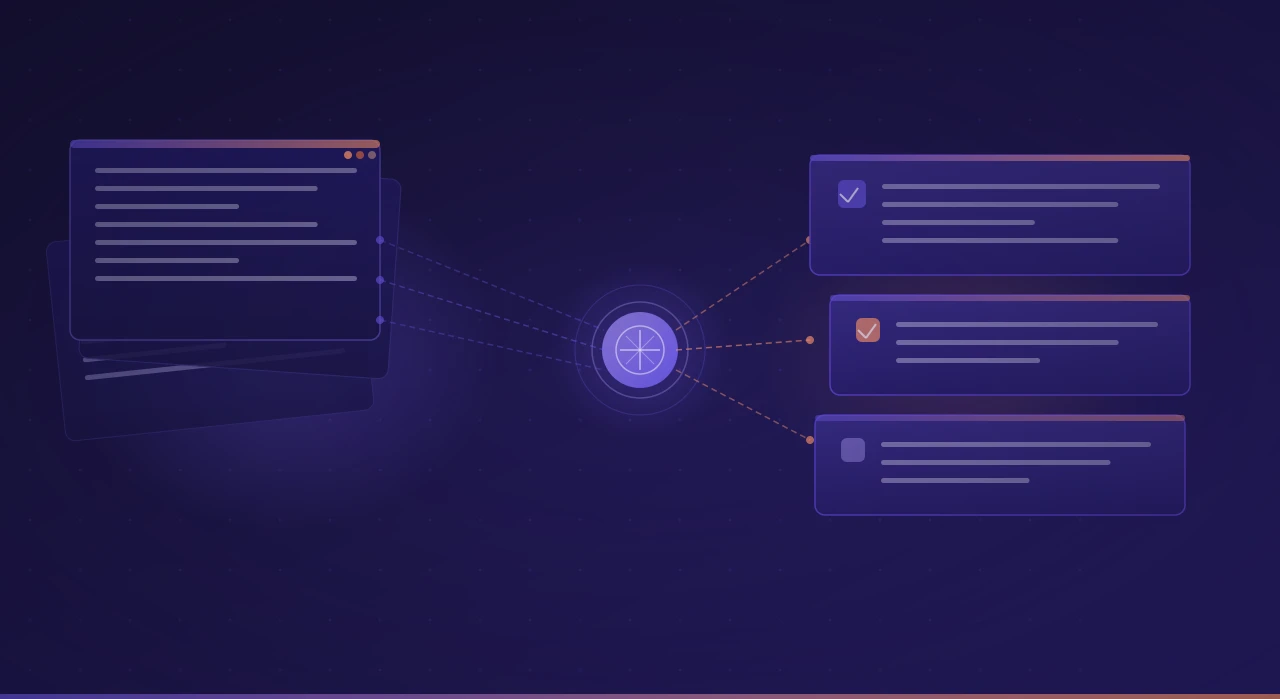
I didn’t start with a grand plan for implementing AI in the company’s processes. I started because I had too much on my plate and too little time to think slowly.
The Starting Point: What Happens When a PM Juggles Too Much at Once
From the outside, the work of a project manager in B2B e-commerce looks like planning and coordination. In practice, it’s maintaining a dozen contexts simultaneously - each project has its own state, its own decision history, its own unspoken understandings with the client, and its own technical dependencies that only one person on the team knows about.
With two projects, it’s manageable. With four, you start losing details. With six, you’re in reactive mode. You put out the fires and hope the rest can wait.
Three months ago, I was closer to “six projects” than “two.” And instead of looking for yet another task management tool, I did something different: I started treating AI as a conversation partner, not an automation machine.
That sentence sounds abstract, so let me get specific.
Month One: Taming the Chaos
Meeting Notes Stopped Being an Information Graveyard
Before I started using AI regularly, my meeting notes looked like this: chaos in the first half, a few sentences of summary at the end, an action item list written on the fly. Useful for 48 hours. After that - a dead document no one returns to.
I changed one thing: I started pasting raw notes into AI with a specific instruction. Not “summarize this” - because that gives you a generic output. Instead: “extract decisions, open questions, risks, and action items with owners.”
The effect was immediate. A note from a client meeting that previously lived only on my laptop started landing in the project as a structured log - ready to paste into ClickUp, readable by a developer who wasn’t at the meeting.
It wasn’t revolutionary. But it was good enough to understand that this was just the beginning.
Project Context Stopped Living Only in My Head
The biggest hidden cost in PM work is the time spent restoring context - your own and others’. You come back from vacation, or return to a project after a week focused on another client, and you have to “reload” from scratch. You read old emails, search for decisions in notes, ask the developer what was agreed.
I started keeping running “project state summaries” generated from notes and correspondence - not as a formal report, but as a living document that answers: if someone joined the project today, what would they need to know?
Context-loading time dropped from an hour to fifteen minutes. That doesn’t sound like a revolution. Over the course of a month - it’s a dozen hours recovered.
Month Two: Quality of Thinking, Not Just Speed
I Started Testing Decisions Before Making Them
This is where something unexpected began.
I had a decision to make about project scope - the client wanted to expand one of the modules midway through the rollout. Classic dilemma: take it, because the relationship matters; refuse, because the scope will fall apart; accept conditionally, but how to frame it without setting a precedent?
Instead of thinking through it alone for an evening, I described the situation to AI - with all the relational and contractual variables - and asked for three scenarios with the consequences of each.
Three approaches came back: one was exactly what I was already thinking, another was a variant I had missed, and the third was wrong - but in a way that helped me understand why my initial thinking was incomplete.
From that moment on, I stopped treating AI as a tool for speeding things up. I started treating it as a tool for slowing down - in moments when a decision matters and I want to make sure I haven’t missed something obvious.
Difficult Messages Stopped Taking Half My Day
PMs in B2B write hard emails. Escalations. Delay notifications. Scope renegotiations. Team messages that need to be clear but can’t sound like an attack.
Every such email cost me a disproportionate amount of time - not because I didn’t know what to write, but because I’d write it, delete it, write it differently, delete it again. A loop that on a bad day lasted two hours.
I started writing the first draft quickly - imperfect, but with intent. Then I’d paste it into AI with a question: “what in this message might be misunderstood? What sounds like a grievance when it was meant to be information?” And I’d get precise feedback I could actually work with.
Time spent writing difficult messages dropped by half. Their quality went up. And for the first time, I stopped second-guessing myself after hitting send.
Month Three: AI Enters Strategic Decisions
From Project Management to Company Management
The third month brought a change I hadn’t planned for: I started using AI in the context of ownership-level decisions, not just project ones.
The company was going through a structural change. There were decisions to be made about the compensation model, client transitions, division of responsibilities between partners. Topics where there’s no single right answer - there are variables, relationships, priorities that can’t be fully articulated.
I started using AI to organize these conversations with myself. Not so that AI would make the decision - that would be naive. But so that before walking into a meeting with my partners, I had my thinking sorted out: what is my actual position, what is negotiable, what are the possible reactions to different proposals, and what do I want to avoid.
This is a function that used to be served by conversations with a trusted outside person - a mentor, an advisor, a friend from the industry. AI didn’t replace that person. But it gave me the ability to have half that conversation on my own, at any time, without demanding someone else’s attention for every topic.
Strategic Documentation Stopped Being a Backlog Item
One of the things that always ends up at the bottom of a PM’s list is decision documentation at the strategic level. What was agreed on is usually known. Why it was agreed - and what was rejected along the way - rarely is.
I started keeping short logs after every significant ownership meeting: what was decided, what the alternatives were, what made the difference. AI helps me structure this from messy notes in a matter of minutes.
In a year - when the question comes up “why did we decide that way back then?” - I’ll have the answer. Not reconstructed from memory. Written down.
What Actually Changed - and What Surprised Me
After three months, there are two things I can say that caught me off guard.
First: AI didn’t make me more operationally efficient in a way that’s visible from the outside. I’m not faster in any obvious sense. I’m more prepared - for meetings, for decisions, for difficult conversations. It’s a difference I feel but that’s hard to show on a chart.
Second: the biggest change wasn’t about the tool. It was about the habit of thinking in dialogue instead of monologue.
PMs tend to solve problems in their heads - quickly, efficiently, often correctly. But that efficiency has a cost: less verification, less questioning of your own assumptions, less room for “maybe I’m looking at this wrong.”
AI imposed a kind of slowdown on me - paradoxically alongside faster execution. I think more slowly about important things. I act more quickly on repetitive ones.
That’s a change no client will pay me for and no client will see. But it has the greatest impact on how I manage both projects and the company.
What I’d Tell Someone Just Starting Out
Don’t start with automation. Start with conversation.
Take one problem on your mind today - an unresolved decision, a difficult email, a project that’s nagging at you - and describe it to AI as precisely as you would to a smart outsider. No shortcuts, no assuming “they’ll know what I mean.”
And watch what comes back.
If something comes back that you hadn’t thought of - that’s your signal to keep going. If only what you already knew comes back - check whether the question was good enough.
In my experience, the problem rarely lies in the tool. It almost always lies in the quality of the question.
Summary
Three months ago, AI was a writing tool for me. Today it’s part of the thinking process - for projects, communication, and strategic decisions.
It didn’t take long. It took a few weeks of regular use and a willingness to experiment with what the tool can actually do.
If you’re a PM in IT and you have the feeling that you’re always one step behind what you should have under control - it’s not a time management problem. Often it’s that you’re thinking alone too much at once.
A second conversation partner helps. Even if it’s an algorithm.
Endora specializes in B2B e-commerce implementations: Magento, Symfony/API Platform, Next.js with ERP, WMS, and PIM integrations. If you’re curious how we manage complex projects - reach out to us.
Our services
Full-spectrum B2B e-commerce support
Keep reading
Recently published

Why I Started the Manufaktura E-commerce Podcast
Michał Zabielski on how the Manufaktura E-commerce podcast started, who it's for, and what episodes you'll find. 22 episodes about building B2B platforms.
Read more
A B2B Sales Platform for Manufacturing: ERP, PIM and Online Sales in One Place
A B2B sales platform for manufacturing brings ERP, PIM and online sales into one process. See how industrial companies can sell online without data chaos.
Read more
Endora Commerce Features: an Overview of the Whole B2B Platform
A complete overview of Endora Commerce features across 10 areas: sales, catalog, pricing, warehouse, channels, AI and more. See what the B2B platform does.
Read more
Endora Commerce Industries: an Overview of 6 B2B Sectors
Endora Commerce for 6 B2B industries: manufacturing, technical distribution, wholesale, MRO, building materials, automotive parts. Which profile fits your business?
Read more
A B2B Platform for Distributors: Pricing, RFQ and ERP Integration
A B2B platform for distributors differs from a standard online store: per-customer price lists, RFQ and ERP integration. See which features you actually need.
Read more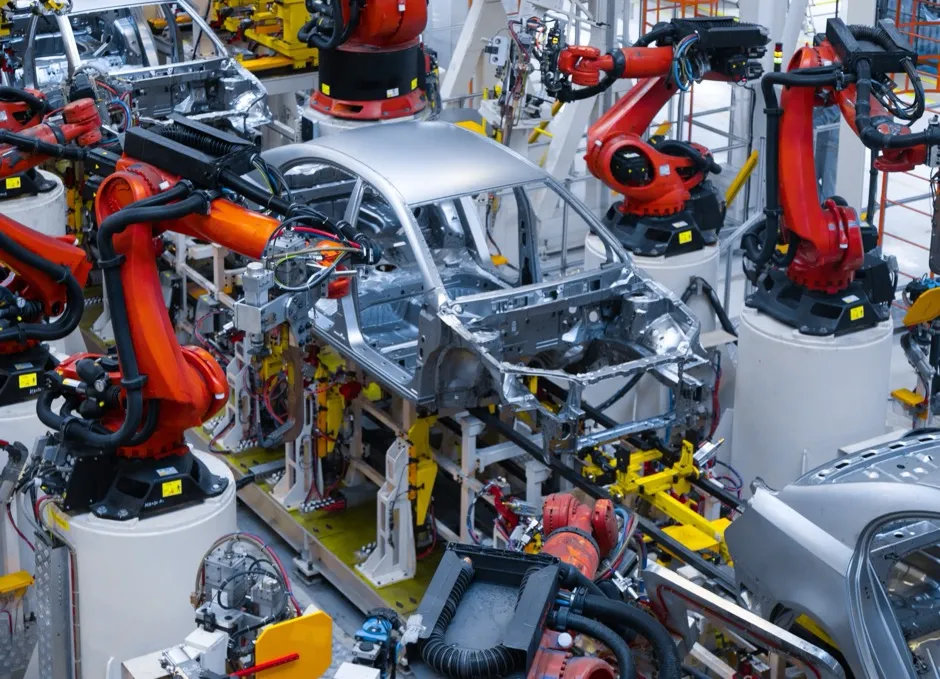
Software for the Automotive Industry: Website, B2B System and Rollout
Software and a website for the automotive industry are more than an e-commerce template. See how to order a B2B system for a dealer or parts distributor.
Read more
Endora Commerce integrations: an overview of all 23 connections to external systems
23 Endora Commerce integrations in one place: payments, ERP, KSeF, AI, analytics and infrastructure. Find out what connects to your stack.
Read more
Endora Commerce vs other B2B platforms: comparing 12 e-commerce systems
12 comparisons of Endora Commerce against Shopify, Magento, WooCommerce and other B2B platforms in one place. Find the system that fits your business.
Read moreHave a specific challenge?
Don't just read about it - let's talk about your case.